

AI is everywhere in 2026. Every operator we talk to is hearing the same pitches — automate your reporting, predict your labor, summarize your week. Some of it is real. Some of it is hype. And for landscape companies running on Aspire, the right question isn’t whether AI matters — it does — but how it actually applies in our specific world.
After 8+ years of building custom integrations, apps, and data work alongside Aspire customers, here’s our perspective on what AI is making possible right now, and where to focus to get the most out of it.
AI’s biggest unlock for landscape pros is already in your hands
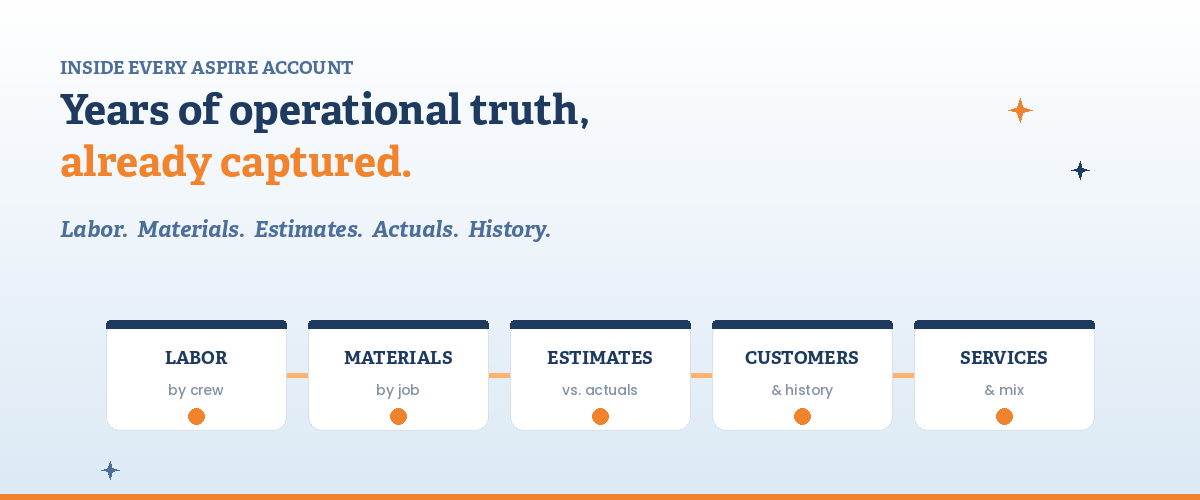
Two things make this moment genuinely exciting: AI is getting dramatically more capable, and every Aspire customer has years of operational data captured in their system — labor by crew, materials by job, estimates and actuals, customer history, service mix. That’s an enormous asset.
Aspire’s native reporting and dashboards already cover a wide range of operational questions, and they keep getting better. Where AI compounds the value is by extending what’s possible into the ad-hoc, exploratory questions — the ones a branch manager asks on a Tuesday morning that don’t quite fit a pre-built report.
Where it gets exciting
The most promising AI applications we’re seeing in our work with Aspire customers aren’t flashy. They’re practical:
- Helping a branch manager investigate which jobs are drifting on labor without opening a BI tool.
- Surfacing the three things in this week’s data that don’t look like the prior four weeks — and explaining why they don’t.
- Drafting a first-pass narrative for a Monday leadership update from yesterday’s numbers.
In every case, AI isn’t doing the management. It’s compressing the time between question and informed conversation.
Where the real work happens
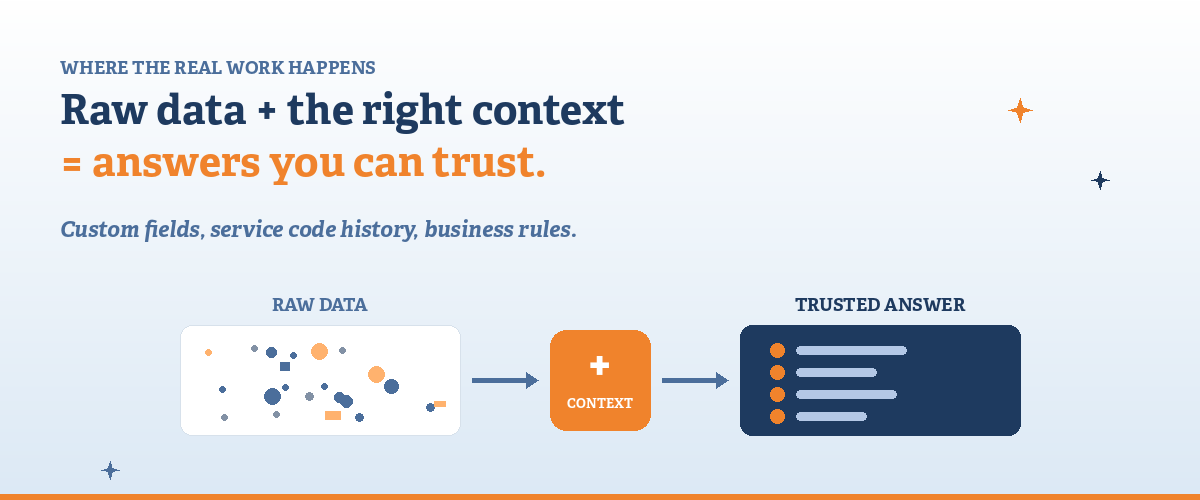
AI is only as good as the data and the context underneath it. Every operator’s business evolves over time — service codes get added, custom fields take on new meanings, estimates and actuals shift as your operation grows. That’s not a problem; that’s the reality of running a real business over many years.
The work, in our experience, is in giving the AI the right context: which custom fields matter, how service codes have evolved at your company, which signals in your data are reliable. That context is what separates trustworthy AI answers from confident-sounding nonsense.
What we’d suggest if you’re thinking about this
Three practical thoughts:
- Watch what Aspire is shipping. Aspire continues to invest in reporting and intelligence capabilities natively. For a lot of operators, that’s where the easiest wins will come from.
- Know which questions matter most. Before you chase a tool, write down the five operational questions you most wish you could answer in five seconds. That list is more valuable than any vendor demo.
- Get clear on the context your AI will need. Custom fields, service code histories, how your team uses Aspire today — that context is what makes AI answers reliable.
A note from us
We’re an Aspire partner first. Over the last 8+ years we’ve been fortunate to work alongside dozens of landscape companies in the Aspire ecosystem, and that’s where every interesting problem we’ve solved has started. Our specialty is the custom corners — building integrations, apps, and data engagements for operators with specific needs.
AI is a new corner, and it’s one we’re working in every day. If you’re an Aspire customer thinking through what AI could mean for your operation, that’s exactly the conversation we’re built for. Talk to us — we know this stack, we’re hands-on with AI across customer engagements, and we know the unglamorous data work that turns AI demos into answers you can trust.
Savvy Otter — a trusted Aspire partner s